Why the 5th House Astrology Shows What Makes You Feel Fully Alive
Jul 17, 2026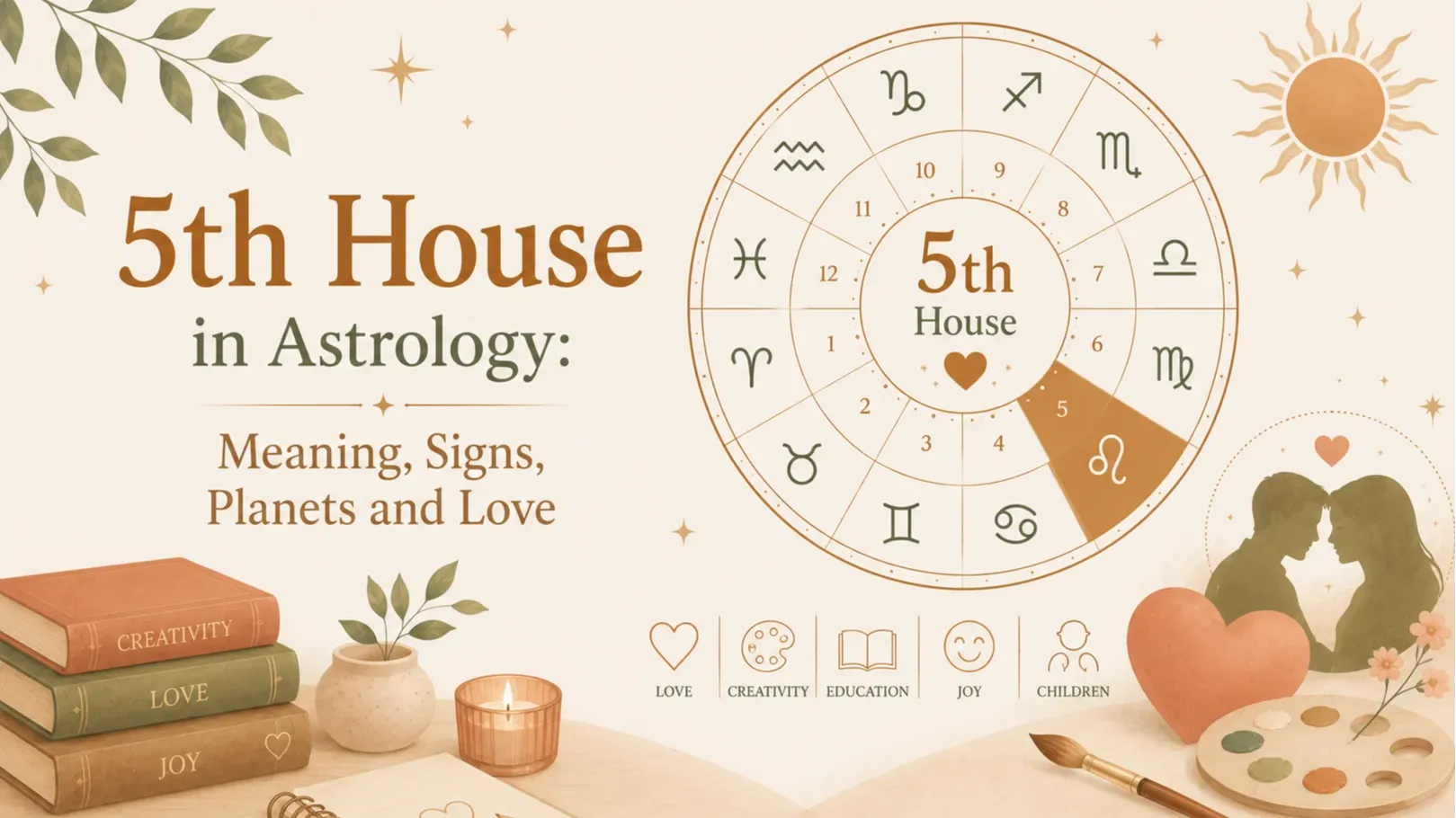
The 5th house in astrology represents creativity, romance, pleasure, children, hobbies, performance, play, and calculated risk. Its zodiac sign, ruling planet, resident planets, and aspects describe how these themes may appear within an astrological reading.
Astrology remains a symbolic belief system rather than a scientifically validated method of predicting personality or future events. A fifth-house reading works better as a tool for reflection than as medical, financial, or relationship proof.
Introduction
What makes one person paint until midnight while another feels most alive coaching children, performing on stage, or planning playful dates? Astrologers examine the 5th house when answering questions about joy, self-expression, romance, creative work, and the desire to leave something personal behind.
A birth chart contains 12 houses, each connected with a different area of life. The 5th house follows the private foundations of the 4th house and comes before the routines and duties of the 6th. It marks the point where private identity moves outward through art, affection, performance, parenting, games, and personal projects.
Reading this house involves more than checking which zodiac sign appears on its cusp. A useful interpretation combines the house sign, its planetary ruler, planets placed inside it, major aspects, and current transits. Missing one layer often produces a description that sounds attractive but says very little.
What the 5th House Represents in a Birth Chart
Astrologers often call the fifth sector the House of Pleasure, yet pleasure is only part of its meaning. It describes activities pursued because they feel personally rewarding rather than socially required. Painting, dancing, gaming, dating, performing, collecting, writing fiction, playing sport, and building a personal brand can all express fifth-house energy.
Children belong here because parenting involves creation, guidance, play, and the continuation of personal values. Traditional astrology also connects this house with pregnancy and descendants, while modern readings place greater weight on the relationship between adults and children. A chart cannot reliably determine fertility, pregnancy outcomes, or the number or sex of future children.
Core fifth-house themes include:
- Creative expression: Music, writing, fashion, theatre, design, photography, crafts, and content creation.
- Romance and dating: Attraction, flirting, courtship, chemistry, and early-stage relationships before formal commitment.
- Children and mentorship: Parenting, teaching, coaching, youth work, and projects treated like personal creations.
- Recreation and performance: Sport, concerts, festivals, gaming, comedy, dance, and public displays of talent.
- Risk and speculation: Competitive ventures, entrepreneurship, contests, investing, and choices involving uncertain rewards.
A freelance designer in Melbourne may express this house through branding projects and weekend ceramics classes. A schoolteacher in Lahore may experience it through drama clubs and mentoring gifted pupils. Neither expression is more valid. The house describes the arena of personal creation, while the rest of the chart describes the style and circumstances.
The 5th house differs from nearby relationship houses. The 7th concerns committed partnerships and contracts, while the 8th deals with shared resources, dependency, and deeper emotional entanglement. The 11th describes friendships, communities, and large audiences. The fifth remains personal: “This is what I love making, doing, or giving.”
How to Read the Fifth House Correctly
Start by finding the sign on the fifth-house cusp. That sign describes the manner in which creativity, romance, pleasure, and self-expression may operate. Aries tends to act quickly, Taurus builds slowly, Gemini experiments with ideas, and Cancer seeks emotional connection. These descriptions remain incomplete until the sign’s planetary ruler enters the reading.
The ruler’s house placement often shows where fifth-house matters develop. A Capricorn fifth house is ruled by Saturn. If Saturn sits in the 10th house, creative work may connect with career, reputation, management, or public responsibility. If it sits in the 4th, creative effort may grow through family, property, heritage, or work completed at home.
A sound reading follows five layers:
- Identify the fifth-house sign. This sets the style, pace, element, and emotional tone.
- Locate the sign’s ruling planet. Its house shows where creative and romantic themes connect with the wider life.
- Study planets inside the house. Each planet adds its own needs, tensions, and abilities.
- Check major aspects. Conjunctions, squares, trines, oppositions, and sextiles modify how easily the planets operate.
- Compare house systems. Whole Sign assigns one full zodiac sign to each house, while systems such as Placidus calculate unequal houses from chart angles.
Accurate birth data matter because the Ascendant and house cusps depend on the date, location, and time of birth. Astro.com, Astro-Seek, TimePassages, and professional programs such as Solar Fire can calculate the chart, but software doesn’t replace interpretation. A wrong birth time may place planets in different houses or change the sign governing the fifth.
An empty 5th house doesn’t mean a person lacks creativity, romance, pleasure, or children. Empty houses are normal because a chart contains more houses than traditional planets. Read the cusp sign, its ruler, and any aspects to that ruler. Transiting planets will also activate the house at different stages of life.
What Planets in the 5th House May Indicate
A planet placed in the fifth becomes closely tied to creation, enjoyment, attraction, performance, and recognition. Its expression depends on its sign, aspects, condition, and chart rulership. Venus in Virgo, for example, behaves differently from Venus in Leo, even though both occupy the same house.
No placement guarantees artistic fame, romantic success, children, or financial profit. It describes a symbolic pattern that astrologers interpret alongside the full chart. Difficult aspects may produce discipline and mastery, while easy aspects can remain unused when a person lacks practice, opportunity, money, education, or confidence.
Personal planets and everyday expression
- Sun: Identity may grow through performance, leadership, art, sport, parenting, or visible personal projects. Recognition can feel deeply motivating.
- Moon: Emotional security may come from affection, play, storytelling, children, hobbies, or caring for a creative community.
- Mercury: Communication becomes part of pleasure. Common outlets include writing, comedy, teaching, coding, gaming, debate, and digital media.
- Venus: Beauty, dating, social enjoyment, music, fashion, and visual art may receive extra attention. The person may value charm and artistic harmony.
- Mars: Creative effort becomes competitive, physical, bold, or entrepreneurial. Impatience in romance and risky decisions can create avoidable conflict.
Social and outer planets
Jupiter is traditionally associated with growth, confidence, education, and opportunity, while Saturn represents limits, time, responsibility, and craftsmanship. Uranus may bring experimentation, Neptune imagination and idealisation, and Pluto emotional intensity. These planets often describe longer developmental themes rather than isolated personality traits.
Jupiter in the fifth may encourage large projects or generous involvement with children, yet excess can lead to overconfidence. Saturn may delay confidence but reward long practice. A musician with Saturn here may spend ten years learning technique before releasing an album. That slow path can create stronger work than early praise without discipline.
How Zodiac Signs Change the Fifth-House Style
The sign governing the fifth house describes how a person approaches joy rather than how much joy they receive. Fire signs often seek movement and visibility, earth signs prefer tangible results, air signs need ideas and social exchange, and water signs create through emotion, memory, atmosphere, or intuition.
Modern astrology commonly associates the natural fifth-house theme with Leo and the Sun. That doesn’t mean everyone has Leo in the fifth. The actual sign depends on the Ascendant and the chosen house system. Treating the fifth as automatically Leo erases the individual chart and creates shallow readings.
The four elemental patterns offer a practical starting point:
- Fire signs: Aries, Leo, Sagittarius. Creative expression tends to be direct, energetic, dramatic, competitive, or adventurous. Praise and freedom can matter greatly.
- Earth signs: Taurus, Virgo, Capricorn. Creativity often involves craft, materials, technique, structure, business, food, gardens, textiles, or practical design.
- Air signs: Gemini, Libra, Aquarius. Ideas, conversation, writing, technology, collaboration, social events, and intellectual play become central.
- Water signs: Cancer, Scorpio, Pisces. Emotional storytelling, music, film, psychology, family history, spiritual symbolism, and private artistic work may dominate.
A Taurus fifth house might enjoy pottery, interior styling, cooking, gardening, or collecting well-made objects from brands such as IKEA, West Elm, or Pottery Barn. An Aquarius fifth house may prefer independent film, electronic music, open-source software, online communities, or unusual relationship arrangements.
The ruler still decides how the sign operates. Pisces on the fifth cusp may suggest imagination, but Jupiter or Neptune could sit in a practical earth house. That combination may turn fantasy into animation, architecture, costume design, or a structured creative business instead of leaving it as an unrealised dream.
Fifth-House Transits, Relationships, and Real-Life Timing
Transits occur when moving planets pass through a natal house or aspect its ruler. Astrologers read fifth-house transits as periods when romance, creativity, hobbies, performance, children, or risk-taking receive more attention. A transit describes a temporary climate, not a guaranteed event.
Jupiter takes about 12 years to orbit the zodiac, Saturn roughly 29.5 years, and the faster Moon crosses the entire zodiac in about 27.3 days. Their fifth-house transits operate on very different timescales. The Moon may mark a playful afternoon, while Saturn can describe several years of disciplined creative work or heavier parenting duties.
Common transit interpretations include:
- Jupiter: More confidence, social opportunities, teaching, travel-based inspiration, or expansion of a creative project.
- Saturn: Reduced free time, serious training, delayed gratification, boundaries in dating, or added responsibility involving children.
- Uranus: Sudden attractions, unconventional hobbies, digital experimentation, or disruption of an old creative identity.
- Neptune: Heightened imagination and romantic idealisation, with a greater need to check facts, promises, contracts, and boundaries.
- Pluto: Intense attachment to a project, power struggles in romance, or a deep change in how the person seeks recognition.
In relationship astrology, one person’s planets may fall inside another person’s fifth house. Venus there can support attraction and shared enjoyment, while Saturn may bring commitment, caution, or pressure. House overlays don’t prove compatibility. Communication, values, safety, consent, finances, family expectations, and behaviour carry more weight in real relationships.
Vedic astrology calls the fifth house Putra Bhava. It traditionally covers children, intelligence, learning, mantra, merit from prior actions, creativity, and speculation. Western astrology gives more space to romance, recreation, personal expression, and pleasure. The traditions overlap, but combining their rules without understanding their different zodiac systems and techniques often creates contradictions.
A marketing consultant once treated Jupiter entering her fifth house as a promise of quick investment gains. She increased her position in a volatile stock and lost money. The more useful expression appeared elsewhere: she launched a training workshop, enjoyed teaching, and gained new clients. Astrological symbolism can prompt reflection, but financial decisions still require research, diversification, and risk limits.
Wrap Up
The 5th house in astrology describes the part of life connected with creation, pleasure, romance, play, performance, children, and personal risk. Its sign sets the style, its ruler links the story with another life area, and resident planets add distinct needs and pressures.
Read the full pattern rather than isolating one placement. An empty house can remain active, difficult aspects can produce skill through practice, and favourable placements still need effort. Use fifth-house symbolism to examine what brings genuine engagement, not to predict fertility, guarantee love, or justify unsafe financial choices.
FAQs Section
What does the 5th house rule in astrology?
The 5th house rules creativity, hobbies, romance, dating, pleasure, performance, children, recreation, games, and speculative risk. Its meaning changes according to the sign, ruler, planets, and aspects connected with it.
What does an empty 5th house mean?
An empty 5th house doesn’t mean a life without romance, creativity, or children. Read the sign on the cusp, its ruling planet, aspects to that ruler, and transits moving through the house.
Which planet is good in the 5th house?
Astrologers often view Venus and Jupiter as comfortable fifth-house placements because they relate to pleasure, affection, growth, and creative confidence. Their results still depend on sign placement, aspects, rulership, personal choices, and the wider birth chart.