Why Some Charts Just Pull Focus in a Crowded Room
Jul 06, 2026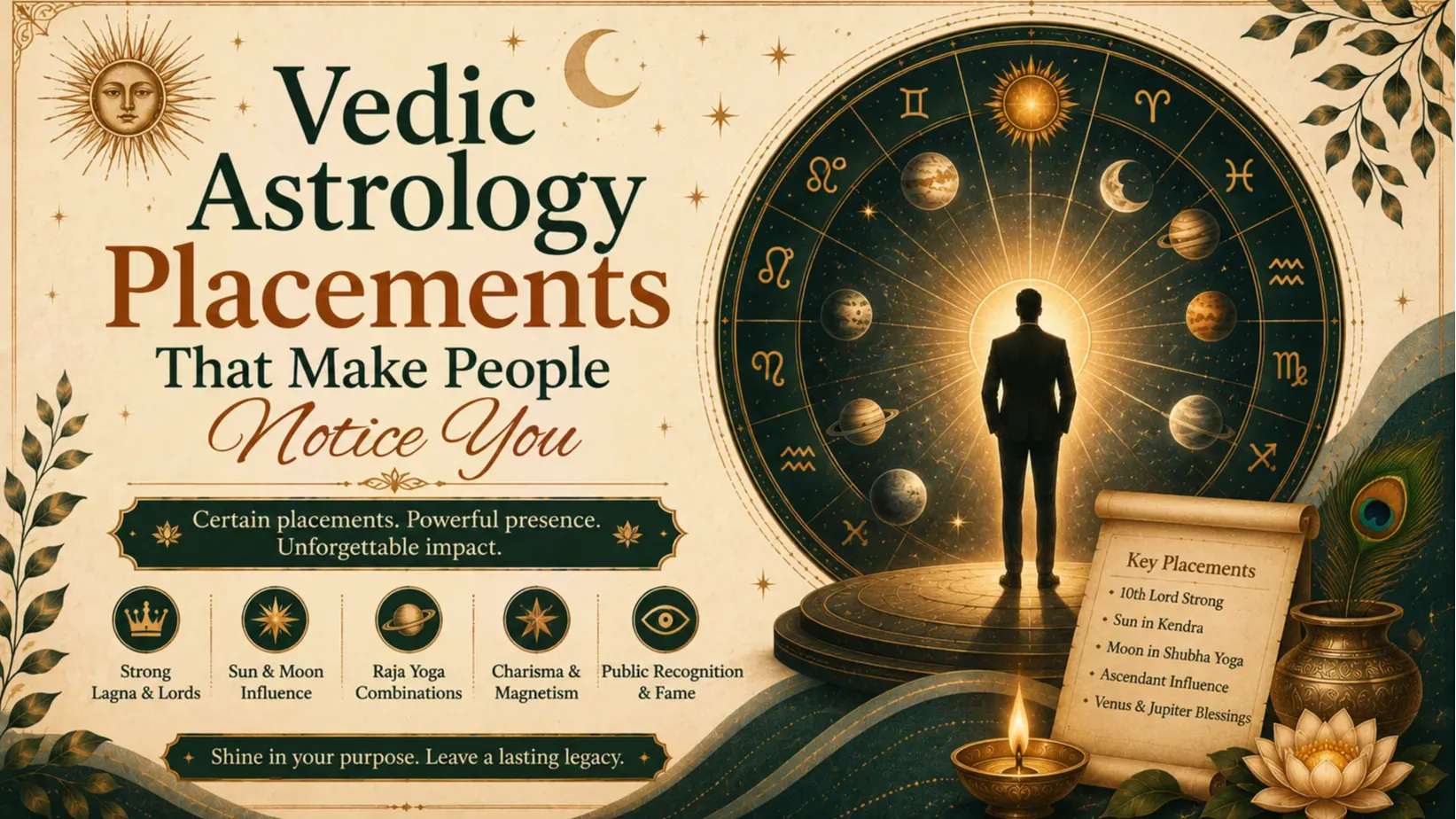
A handful of specific placements in a Vedic birth chart tend to show up again and again in people who draw eyes without trying. Venus, the ascendant lord, and the fifth house carry most of the weight, and their strength or affliction changes how that attention actually feels to live with. This piece walks through the placements, the real mechanics behind them, and the trade-offs nobody mentions at the dinner party.
Introduction
Ever notice how certain people seem to command a room the second they walk in, while others with equally sharp features get overlooked? Vedic astrology has an answer that goes beyond "charisma" as a vague trait. It ties visible presence to specific planetary placements, house strengths, and aspects in the birth chart, or kundli. This piece breaks down which combinations actually correlate with magnetic presence, why they work the way they do, and what happens when that same energy tips into something harder to manage.
Venus and the First House: The Classic Attraction Signature
Venus rules beauty, charm, and social magnetism in Jyotish, and its placement in the first house, or lagna, is one of the most repeated patterns astrologers point to when a client asks why strangers keep striking up conversations with them. A well-placed Venus here doesn't just add physical appeal. It shapes voice tone, grooming instinct, and an ease in small talk that reads as warmth rather than performance.
- Venus in its own signs, Taurus or Libra, in the first house tends to produce a calm, polished presence rather than flashy attention-seeking.
- Venus in Pisces, its exaltation sign, often shows up in people described as having an almost cinematic quality, think of how Bollywood casting directors talk about "screen presence."
- A debilitated Venus in Virgo in the first house can still draw attention, but it often comes with self-consciousness about appearance, sometimes tipping into excessive grooming habits or costly cosmetic spending.
- Venus conjunct the ascendant lord amplifies both the pull and the pressure of being watched, since two forces of self-expression combine in one house.
A client in her late twenties, a marketing coordinator in Pune, once described feeling exhausted by constant compliments on her appearance despite never dressing up for it. Her chart showed Venus in Libra in the first house, conjunct Mercury. The combination gave her natural elegance and a quick wit, but she'd never learned to see it as anything other than background noise, since it had always been there.
Fifth House Strength: Creative Charisma Over Physical Beauty
The fifth house governs creativity, romance, and intelligence, and when it's strong, the attention someone draws often has less to do with looks and more to do with how they think and express ideas. A well-aspected fifth house lord frequently appears in the charts of performers, writers, and public speakers, the kind of people whose presence lingers after they've left the conversation.
Jupiter's Role in Fifth House Dynamics
Jupiter aspecting the fifth house, or sitting there directly, tends to add a teaching or mentoring quality to charisma. People with this placement often get remembered less for their looks and more for making others feel smarter or more hopeful after talking to them. This shows up frequently in charts of educators and motivational speakers across India and the diaspora.
When the Fifth House Turns Overexposed
A fifth house crowded with too many planets, especially Rahu, can flip creative charisma into something closer to attention-seeking behavior. This is a pattern seen often in charts of influencers who chase visibility for its own sake, sometimes at real cost to mental steadiness, since Rahu's hunger for more rarely settles even after the attention arrives.
Rahu's Double-Edged Influence on Public Attraction
Rahu, the north lunar node, is the planet most associated in Vedic tradition with sudden, larger-than-life public attention. It doesn't work like Venus's gentle magnetism. Rahu creates a kind of obsession, in others and often in the native too, that can build a public profile fast but rarely brings lasting satisfaction.
- Rahu in the tenth house, the house of career and public standing, often correlates with sudden fame, viral moments, or unusual career visibility.
- Rahu conjunct the Moon, sometimes called Grahan Yoga, can create emotional volatility alongside the public pull, something several practicing astrologers in Delhi flag as a caution point during consultations.
- Rahu in the seventh house frequently shows up in charts of people who attract intense romantic interest quickly, though the relationships themselves often struggle with instability.
- Rahu periods, or dashas, tend to intensify these effects temporarily rather than permanently, which is why timing matters as much as placement.
A software engineer in Bengaluru, mid-thirties, mentioned during a reading that he'd unexpectedly gone viral on a professional networking platform after a single post, gaining thousands of followers within days. His chart showed Rahu transiting his tenth house at the time, conjunct his natal Sun. The attention brought opportunities, but he also described a restlessness that didn't fade even after the post's momentum died down, a fairly textbook Rahu pattern.
The Ascendant Lord's Placement and Its Aspects
The lagna lord, or ascendant ruler, sets the tone for how a person's core identity gets expressed outwardly. Where it sits, and which planets aspect it, often decides whether someone's presence feels inviting or intimidating.
Strong Aspects from Benefics
When Jupiter or Venus aspects the ascendant lord, the resulting presence tends to feel approachable, even reassuring, to strangers. This combination shows up often in charts of people described as having a "warm aura," a phrase Western astrology borrowed loosely from this older tradition.
Malefic Aspects and Intense Presence
Mars or Saturn aspecting the ascendant lord can create a different flavor of attention entirely, one built on intensity or authority rather than warmth. This is common in charts of military leaders, surgeons, and litigators, people whose presence commands a room through gravity rather than charm.
Practical Signs to Check in Your Own Chart
Reading these placements without a full chart calculation only gives half the picture, but a few quick checkpoints help before consulting a professional astrologer or software like Jagannatha Hora.
- Note which sign occupies your first house and whether Venus, Mars, or Saturn sits there.
- Check your fifth house for planetary crowding, especially Rahu or multiple malefics together.
- Look at where Rahu currently transits relative to your natal tenth house, since this shifts every year or so.
- Consider whether your lagna lord receives more benefic or malefic aspects overall.
Wrap Up
Attention in a Vedic chart rarely comes from one placement alone. It's usually a layered mix of Venus's charm, the fifth house's creative pull, Rahu's unpredictable spotlight, and however the ascendant lord gets aspected. The real skill isn't chasing these placements for validation, it's learning to carry the attention they bring without losing steadiness underneath it. A strong chart for visibility still needs a grounded Moon and a settled mind to make that visibility sustainable.
FAQs
Which planet is most linked to attractiveness in Vedic astrology?
Venus is the primary significator of beauty, charm, and romantic appeal, especially when well placed in the first, fifth, or seventh house.
Does Rahu in the chart always mean fame or public attention?
Not always. Rahu's placement, especially in houses like the tenth or seventh, correlates with visibility, but the outcome depends heavily on aspects, dasha timing, and the rest of the chart.
Can a weak first house still produce a magnetic personality?
Yes. A strong fifth house or well-aspected ascendant lord can create charisma even when Venus itself is weakly placed, since attention has more than one astrological source.