When the Shadow Planet Takes the Corner Office: Rahu in the Tenth House
Aug 03, 2026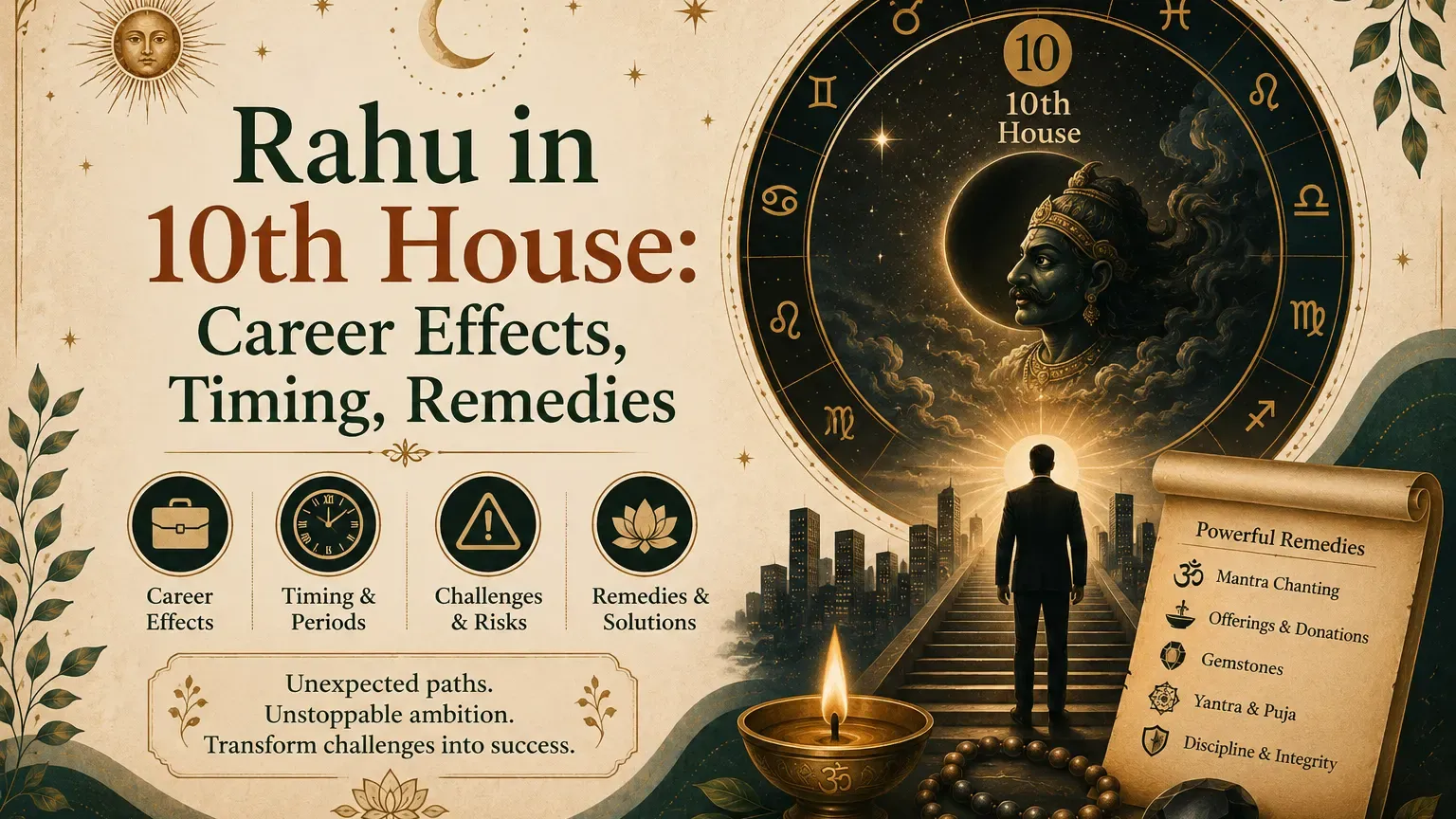
Rahu in the 10th house pushes a person toward unconventional, high-visibility careers, often outside the family trade or home country. It brings fast rises, public attention and sudden reversals in equal measure. Its true impact depends heavily on the sign, nakshatra and dasha period it activates.
Introduction
What makes one person's career explode overnight while another's stalls despite equal talent? Vedic astrology often points to Rahu, the north lunar node, sitting in the 10th house of karma and public standing. This placement is one of the most talked about in career astrology because it rewards ambition but rarely offers a smooth, predictable path. Readers here will get a grounded look at what this placement actually means, how it plays out across professions, and what classical texts and practicing astrologers say about timing and remedies.
What the Tenth House Actually Governs in a Birth Chart
The 10th house, called Karma Bhava in Sanskrit, sits directly opposite the 4th house of home and roots. Brihat Parashara Hora Shastra, the foundational text of Vedic astrology, ties this house to profession, public reputation, authority and one's standing in society. It also touches government dealings, employers and the visible face a person shows the world.
- Rules career direction, promotions and professional identity
- Connects to father in some lineages, and to authority figures in others
- Governs public image, awards and social recognition
- Shows how a person is perceived by strangers, not just family
A weak or afflicted 10th house often shows up as job instability or a mismatch between skill and recognition. A strong one usually correlates with steady authority and public trust, at least according to classical readings passed down through generations of practicing Jyotishis.
How Rahu Behaves When It Lands in the House of Career
Rahu is a Chaya Graha, a shadow point rather than a physical planet, formed from the mythological churning of the ocean described in the Puranas. It represents desire, obsession and the urge to acquire what feels just out of reach. Placed in the 10th house, that hunger attaches itself directly to career and public status.
This combination often produces careers in fields that did not exist a generation earlier, or professions built on foreign connections, technology, media or unconventional platforms. Aviation, cryptocurrency trading, political consulting, influencer work and international business all show up repeatedly in case studies of this placement. The person rarely follows the family profession and instead builds something new, sometimes to the discomfort of relatives who expected a safer path.
Sudden Rise, Sudden Risk
The same hunger that fuels rapid growth also creates blind spots. Rahu clouds judgment in the area it occupies, so 10th house natives can misread contracts, trust the wrong business partner, or chase status faster than their skills can support. Scandal, sudden job loss or public controversy are documented risks, not guarantees, and they usually surface during specific planetary periods rather than constantly.
Exaltation Debate Among Astrologers
Classical texts disagree on Rahu's exact exaltation sign. Some schools, including several modern Parashari practitioners, place it in Taurus, while others following older Jaimini-influenced traditions argue for Gemini. This disagreement matters for 10th house readings because a well-placed Rahu in a friendly sign like Gemini, Virgo or Aquarius tends to soften the volatility and lean harder into innovation rather than chaos.
Rahu's Nakshatras and Their Career Signatures
Rahu rules three nakshatras: Ardra, Swati and Shatabhisha. Each one colors the 10th house placement differently, and experienced astrologers weigh this as heavily as the sign itself.
- Ardra, ruled by Rudra, often produces careers built through destruction and rebuilding, common among crisis managers, surgeons and turnaround consultants
- Swati, ruled by Vayu, favors independent business, trading, aviation and roles requiring constant movement or negotiation
- Shatabhisha, linked to healing and isolation, frequently appears in charts of researchers, data scientists and people working in specialised or remote fields
Knowing the exact nakshatra, not just the sign, is one of the details beginners tend to skip, and it often explains why two people with Rahu in the same sign have completely different career stories.
Rahu's Mahadasha and Antardasha Timing
Under the Vimshottari Dasha system used by most Parashari astrologers, Rahu's main period, or Mahadasha, lasts 18 years, the longest of any graha. When this period aligns with a 10th house placement, career changes tend to concentrate heavily within it rather than spreading evenly across a person's working life.
The Krishnamurti Paddhati system, developed by K.S. Krishnamurti in the twentieth century, adds a layer many modern practitioners use alongside Parashari methods: sub-lord analysis within the dasha to pinpoint the exact months a career shift is likely, not just the years. Astrologers using this combined approach often report sharper accuracy on job change timing than dasha analysis alone provides.
A Real Career Pattern Worth Studying
A case frequently discussed in Vedic astrology circles involves a woman we'll call Priya, born with Rahu in the 10th house in Swati nakshatra. She spent her twenties in a stable accounting job that felt increasingly wrong for her. When her Rahu Mahadasha began at age 29, she left the firm within eight months and moved into public relations for a technology startup in Singapore, a field with zero overlap with her training.
Within three years she was managing a regional PR portfolio, but the same period brought a public dispute with a former employer over a non-compete clause, a pattern astrologers link to Rahu's tendency to create legal or reputational friction alongside genuine growth. Her story mirrors a broader trend documented across career astrology consultations: rapid, unconventional rise paired with at least one serious professional conflict during the Rahu period.
Remedies and Practical Steps Astrologers Recommend
Remedial measures in Vedic astrology are traditional practices meant to steady the mind and behavior linked to a planet, not medical or guaranteed outcomes. For Rahu in the 10th house, several practices appear consistently across Jyotish literature.
- Chanting the Rahu beej mantra on Saturdays, the day traditionally associated with shadow planets
- Donating black sesame seeds, mustard oil or blue cloth to those in need
- Feeding stray dogs, an animal traditionally linked to Rahu's energy
- Wearing hessonite, known as Gomed, only after consultation with a qualified astrologer, since it is not suited to every chart
- Avoiding major career decisions during eclipse periods, when Rahu's influence is considered heightened
Alongside ritual remedies, practical grounding habits, like having a mentor outside the industry and documenting every professional agreement in writing, address the same blind spots the placement is known for, without relying on prediction alone.
Wrap Up
Rahu in the 10th house rewards people who can handle ambiguity, move fast and accept that recognition rarely arrives through the expected route. The sign, nakshatra and dasha timing shape whether that energy builds a genuinely strong career or a string of near misses. Anyone reading their own chart should treat this placement as a pattern to work with consciously, not a fixed script to fear or blindly trust.
FAQs
Is Rahu in the 10th house good or bad for career?
It is neither purely good nor bad. It tends to bring unconventional, fast-moving career growth along with real risk of controversy or sudden change, and the outcome depends on the sign, nakshatra and supporting planets in the chart.
What professions suit Rahu in the 10th house?
Fields tied to technology, foreign trade, aviation, media, politics and research come up most often, since these areas reward the boundary-pushing instinct Rahu brings to career matters.
How long does Rahu's effect on career last?
Its Mahadasha runs for 18 years under the Vimshottari system, though the most active career shifts usually cluster around specific antardasha periods within that span rather than the full 18 years evenly.