The Science and Symbolism Behind Mercury Retrograde
Aug 05, 2026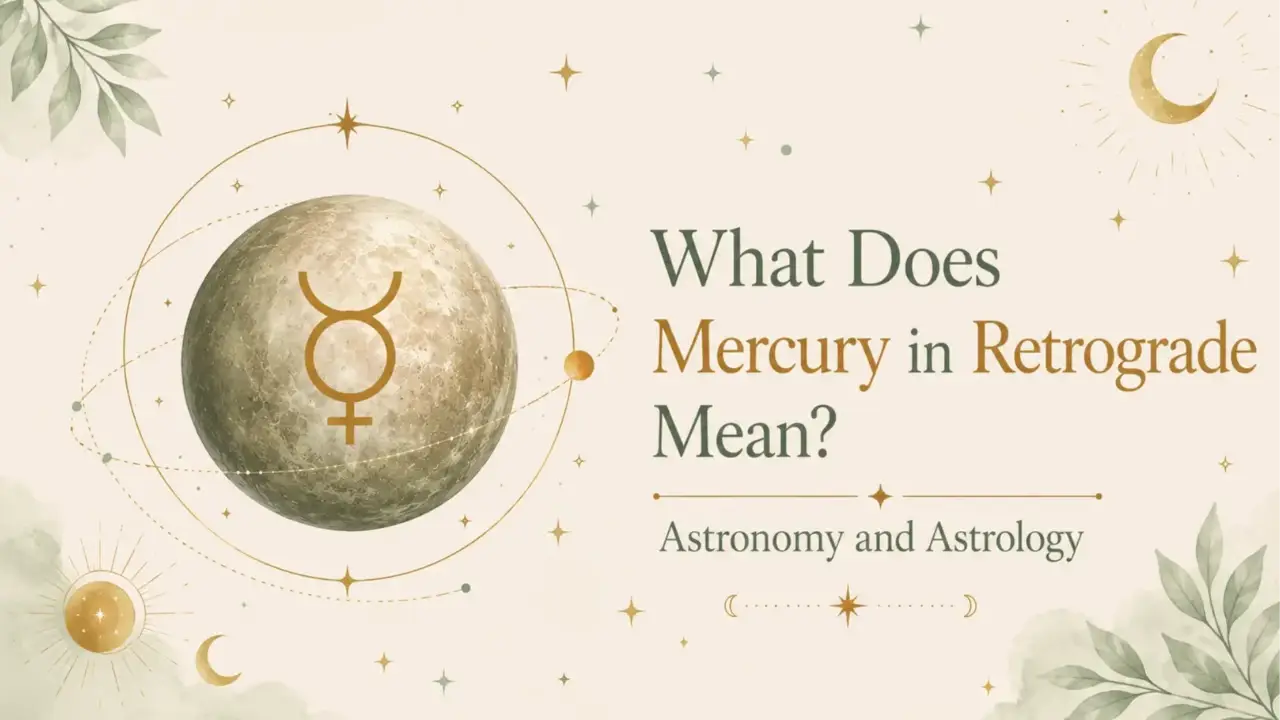
Mercury in retrograde is an optical illusion where the planet appears to move backward in the night sky. Astrologers associate this three-week cycle with frustrating disruptions in communication, technology, and travel. You can manage these periods by pausing major decisions, double-checking travel itineraries, and backing up digital files.
Introduction
You check your phone and see three missed calls from a client, a text that never sent, and a delayed flight alert. Someone nearby will inevitably blame the planets. This specific astrological event happens three or four times every year, causing widespread panic among zodiac enthusiasts. We need to look at both the astronomical facts and the cultural beliefs to grasp why this phase commands so much attention.
The Astronomical Reality
Let's look at the actual physics of our solar system. The planets orbit the Sun at vastly different speeds and distances. Earth sits about 149 million kilometers from the Sun and takes 365 days to complete one rotation. Mercury sits much closer, at a distance of roughly 58 million kilometers, and finishes its orbit in just 88 days.
This dramatic speed difference creates a specific visual trick from our vantage point on Earth. When the smaller planet overtakes our planet on its shorter inside track, it looks like it stops and reverses direction. NASA scientists compare this visual effect to driving on a busy highway. If you pass a slower car, that other vehicle temporarily appears to move backward relative to your position.
The visual illusion lasts for about three weeks. Ancient Babylonian astronomers tracked these apparent reversals using clay tablets as early as the seventh century BCE. They noted the exact degrees in the sky where the planet seemed to stall, creating the foundation for future astronomical mapping. The planet never actually changes its physical direction.
Tracking the Exact Measurements
- The planet travels at approximately 47 kilometers per second through space.
- The cycle occurs exactly three to four times per calendar year.
- Each apparent backward phase lasts roughly 29 days from start to finish.
- Astronomers refer to the normal forward movement as prograde motion.
The Astrological Interpretation
Astrologers view planetary movements through the lens of ancient mythology. In Roman mythology, Mercury served as the messenger god. He governed commerce, financial exchanges, short travel, and verbal communication. Modern astrology maps these exact same domains onto the physical planet itself, creating a system of meaning based on orbital patterns.
When the planet appears to move backward, practitioners believe its governing areas go into a state of sleep or chaos. Information gets lost in transit. Misunderstandings multiply quickly. Prominent astrologers like Susan Miller advise their readers to avoid signing binding contracts or launching new commercial businesses during these highly sensitive planetary windows.
The impact heavily depends on a person's natal chart. The planet rules two specific zodiac signs: Gemini and Virgo. People born under these sun signs often report feeling the effects more intensely than others. They might struggle to articulate their thoughts or find their carefully organized daily schedules falling apart without warning.
The Shadow Period Explained
- The phase begins two weeks before the official cycle, known as the retroshade.
- The planet slows down visually, entering the exact patch of sky it will soon backtrack across.
- Initial signs of communication breakdown often trigger during this pre-shadow window.
- The post-shadow period lasts another two weeks after forward motion resumes.
Real-World Impacts on Daily Life
You can see the cultural impact of this astrological event in common workplace scenarios. A marketing director schedules a massive product launch for mid-August. The website crashes, the Stripe payment gateway fails, and half the promotional emails bounce. This exact situation happened to a boutique agency I consulted for in 2023. They ignored the astrological calendar, and their Shopify store experienced a database failure on launch morning.
Travel plans also face unusual friction during these three weeks. You might book a United Airlines flight months in advance, only to face three consecutive gate changes and a lost suitcase at the carousel. While commercial airlines experience logistical errors daily, astrology apps report massive spikes in user complaints about travel delays during these specific planetary windows.
Take the example of a retail manager signing a commercial lease for a new home decor showroom in Chicago. The lease gets finalized right in the middle of a November transit. The city delays the construction permits, the wrong paint colors arrive from Sherwin-Williams, and the grand opening pushes back by two full months. Astrologers immediately point to the planetary alignment as the direct cause.
Common Disruptions Reported
- Sudden hardware failures on Apple MacBooks and Windows PCs.
- Unexpected text messages or calls from former romantic partners.
- Missed package deliveries through FedEx or the postal service.
- Misinterpreted tone in casual text messages and professional emails.
Historical Context and Pop Culture
The Old Farmer's Almanac has published planetary tracking tables for over two centuries. They historically advised agricultural workers on planting cycles and weather patterns based on these specific planetary phases. The publication still prints exact dates for these cycles, proving the long-standing integration of astrology into practical American life and business.
During the 1970s, New Age movements pulled these astrological concepts out of niche circles and into mainstream bookstores. People began applying the rules of planetary motion to corporate business models and modern psychological counseling. The concept shifted from an agricultural tracking tool to a personal management philosophy used in daily life.
Right now, the topic completely dominates modern social media. The hashtag for this specific transit has billions of views on platforms like TikTok and Instagram. Content creators build entire brands around warning their followers about upcoming dates. They sell survival guides, crystals, and specialized planners designed to mitigate the negative effects of the cycle.
Modern Cultural Markers
- Specialized smartphone apps offering daily planetary transit notifications.
- Mainstream merchandise featuring survival slogans at retail stores like Urban Outfitters.
- Corporate marketing campaigns using the astrological event to run flash sales.
- High-profile celebrities blaming public relations disasters on the planetary movement.
Surviving the Transit with Practical Adjustments
You don't need to pause your entire life just because a planet looks like it is moving backward. You simply need to alter your approach to daily tasks. These weeks offer a built-in schedule for reviewing past projects. Instead of starting a brand new initiative, you should edit the rough draft you abandoned last month.
Protect your digital life proactively. Buy a physical Seagate hard drive or upgrade your Google Drive storage before the transit begins. Run complete manual backups of your phone and laptop computer. This simple technical habit prevents catastrophic data loss if a device suddenly fails mid-cycle when you need your files the most.
Take extra time with your daily logistics. Leave for the airport a full hour earlier than usual. Read every single word of a new contract twice before picking up a pen. If a conversation feels unnecessarily tense, step away and reply the next morning with a clear head and better perspective.
Recommended Actions to Take
- Reconnect with old friends you haven't spoken to in several years.
- Reorganize your physical workspace and digital filing systems.
- Double-check calendar invites and meeting time zones carefully.
- Review financial budgets and track down any missing business receipts.
Wrap-Up
The concept blends hard astronomical science with thousands of years of human storytelling. The physical planet simply moves along its orbit, creating a predictable visual trick in the night sky. Yet the cultural meaning we attach to that movement affects how millions of people conduct their daily lives. By leaning into periods of reflection and slowing down our rapid communication, we can actually use this recurring cycle to our advantage.
FAQs Section
Does Mercury retrograde actually affect electronics?
No scientific evidence proves that planetary orbits cause electronic malfunctions or software crashes. The belief stems entirely from astrological traditions that link the planet to systems of communication and modern technology.
How long does the retrograde period last?
The visual reversal lasts for approximately three weeks and occurs three to four times per calendar year. You also have to account for the two-week shadow periods occurring right before and after the main event.
Which zodiac signs get hit the hardest?
Gemini and Virgo typically feel the effects most intensely because Mercury serves as their ruling planet in traditional astrology. Anyone with major planetary placements in those two signs might experience heavier communication disruptions.